
 Media Room

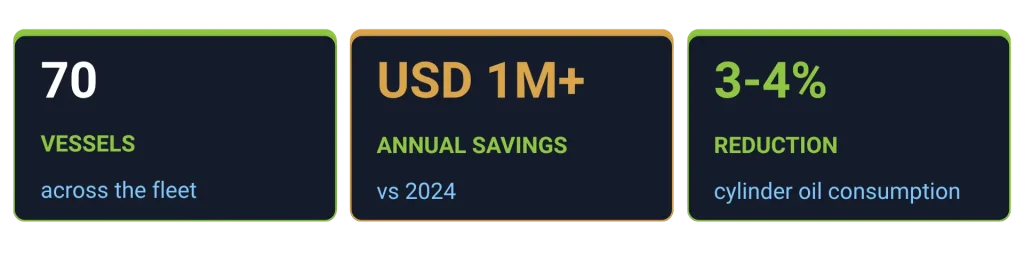
A 2025 fleet-wide initiative across 70 vessels — reducing cylinder oil consumption while safeguarding engine health and maintaining full OEM compliance.
In today’s maritime landscape, much of the industry’s focus rightly centres on fuel consumption optimization — a critical lever for improving efficiency, reducing costs, and complying with tightening environmental regulations.
Yet optimizing cylinder oil consumption in two-stroke main engines remains an equally practical and often underutilized way of creating value for shipowners. When effectively managed, it not only reduces operational costs but also enhances lubrication performance and ensures reliable engine operation across the fleet.
Maintaining the correct cylinder oil feed rate is vital for safe and efficient engine operation. Under-lubrication accelerates abrasive and corrosive wear on liners and piston rings, leading to costly unplanned maintenance. Conversely, excessive lubrication causes harmful deposit build-up — ring sticking, restricted ring rotation, combustion gas blow-by, and eventual liner and piston ring damage.
In 2025, our technical team embarked on one of its most impactful machinery optimization initiatives — a fleet-wide Cylinder Oil Optimization Program spanning 70 vessels equipped with various engine types.
The goal was clear: reduce cylinder oil consumption while safeguarding engine health, maintaining optimal cylinder condition, and ensuring full compliance with OEM requirements.
01/ ASSESMENT
The starting point.
The initiative began with a comprehensive diagnostic review across all 70 ships, focusing on:
- Historical liner, ring pack, and piston condition
- Scrapedown oil analysis trends
- Cylinder oil feed rate (g/kWh) settings
- Lubricator configuration and control modes
- Cylinder Oil BN–fuel sulphur level compatibility
- Engine-specific lubrication patterns
02/ OUR APPROACH
Gradual. Controlled. Vessel-specific.
A gradual, controlled feed-rate reduction strategy was implemented, backed by close monitoring of:
- Lubricator operating settings
- Routine onboard and laboratory scavenge-drain analysis
- Liner and piston inspection results
- Wear-rate trends
- Engine load profile
- OEM recommendations and safety thresholds
Rather than applying a uniform adjustment across the fleet, each vessel was assessed individually. This vessel-specific approach allowed us to identify ships with sufficient operating margins to safely reduce feed rates, while maintaining stricter control and enhanced oversight on higher-risk units.
03/ WHAT CHANGED
The shift was as much cultural as technical.
We moved away form the long-held belief that “more oil means safer operation” toward a performance-driven approach:
- Use the correct oil
- Apply the right feed rate
- Monitor the right indicators
- Adjust only when supported by evidence
This mindset improved consistency across the fleet, minimized over-lubrication, and strengthened the confidence of engineers and technical managers in the optimization process. With the right controls in place, feed-rate optimization becomes a systematic improvement — not a risky cost-cutting exercise.
04/ KEY OUTCOMES
What the program delivered.
Across all 70 vessels the program delivered:
- Reduced cylinder oil consumption
- Improved control and optimization of feed-rate settings
- Continued safe and stable engine performance
- A more standardized lubrication strategy across the fleet
05/ 2025 RESULTS
The benefits became evident within months.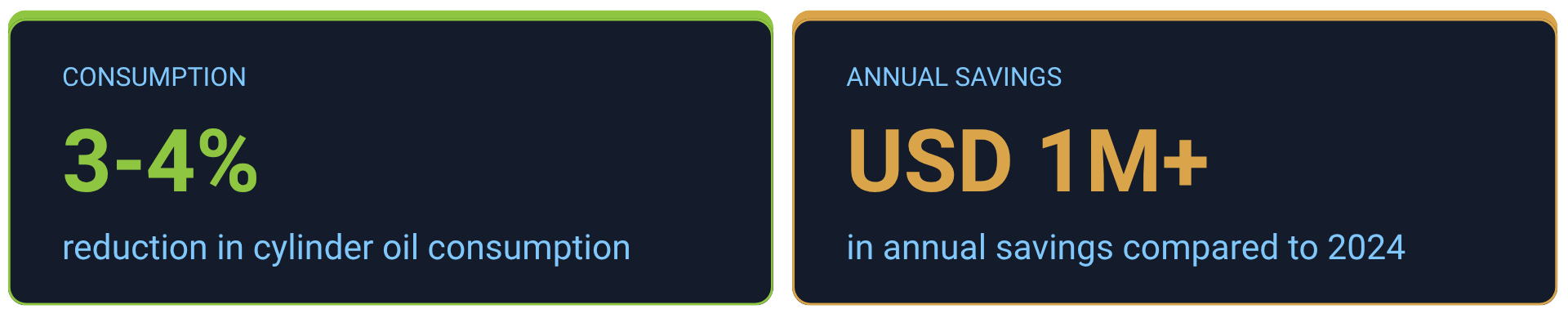
In addition to the finanical gains, several key technical improvements were observed:
06/ FINAL THOUGHTS
The broader lesson
In marine operations, efficiency gains do not always require major capital investments. Sometimes, the biggest improvements come from re-evaluating long-standing practices and optimizing consumables through disciplined engineering.
Cylinder oil optimization is a clear example — offering both economic and operational benefits. Beyond cost savings, it delivers greater visibility, improved control, and a more mature, data-driven maintenance culture.